
How to Generate Brand Awareness in 30 Days
Discover how to generate brand awareness with a proven 30-day framework. A practical guide for founders to build reach, trust, and momentum.
Forget everything you’ve heard about that one viral moment, that one perfect ad, or that one magic-bullet strategy. Real, lasting brand awareness isn't born from a single explosion of attention. It’s built brick by brick, through small, consistent, daily actions that stack up over time.
The secret is turning marketing from a dreaded, overwhelming chore into a simple, repeatable habit. A habit that builds momentum and forges a genuine connection with the right people, day in and day out.
The Myth of Overnight Brand Success
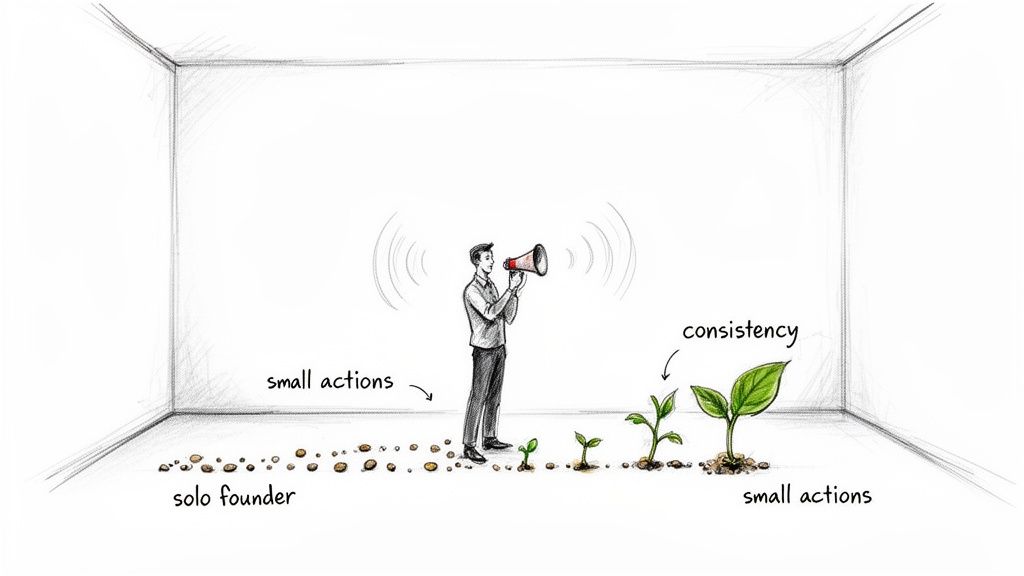
If you're a solo founder or indie hacker, you know the feeling. It's like shouting into an empty room. Everyone tells you to be everywhere at once—Twitter, LinkedIn, Reddit, you name it. But that path almost always leads to burnout, leaving you feeling completely invisible.
This guide is here to dismantle that frustration. We're going to ditch the inconsistent marketing sprints and the analysis paralysis that comes from having way too many options. This isn’t about chasing a single home run. It's about reframing brand awareness as the powerful result of compound interest—the kind that grows from tiny, strategic actions you take every single day.
The Power of a Consistent Identity
Before you start taking action, let’s talk about your brand's heartbeat. It needs to be consistent. Your logo, your colors, your tone of voice—it all has to look and feel the same, no matter where people find you.
This isn’t just about making things look pretty. It's a powerful psychological trigger that builds trust and recognition in an incredibly noisy world.
Think about it: consistent branding can boost brand recall by 33%. That directly fuels the awareness that turns curious strangers into loyal customers. When your visual identity is uniform, it cuts through the thousands of ads people see daily. For bootstrapped creators, this consistency can mean serious revenue growth, with some seeing lifts of up to 33%. You can dig into these branding statistics to see just how big the impact can be.
A New Approach for Builders
I've designed this guide with a simple, sustainable system in mind—one for builders, not just marketers. It’s meant to turn marketing from a source of anxiety into a manageable, even motivating, daily habit. Let's leave the vague advice behind and walk a clear path forward.
We're going to focus on a system that helps you:
- Define your purpose: Get to the emotional core of your brand and pinpoint exactly who you're building for.
- Focus your energy: Pick a few high-impact channels to own instead of trying to be a ghost on all of them.
- Build a daily habit: Learn how to execute small, meaningful marketing actions in just a few minutes a day.
- Track what matters: See exactly how your daily efforts connect to real results, like website traffic and sign-ups.
The goal is to make marketing a rewarding part of your building process. By logging small wins every day, you create a streak of momentum that is both motivating and effective, turning quiet consistency into an undeniable brand presence.
This system is about making deliberate choices and building a practice that actually lasts. It's time to stop feeling overwhelmed and start building your brand with confidence, one small action at a time. This is how you generate brand awareness that is authentic, durable, and truly built for the long haul.
Lay Your Brand's Foundation
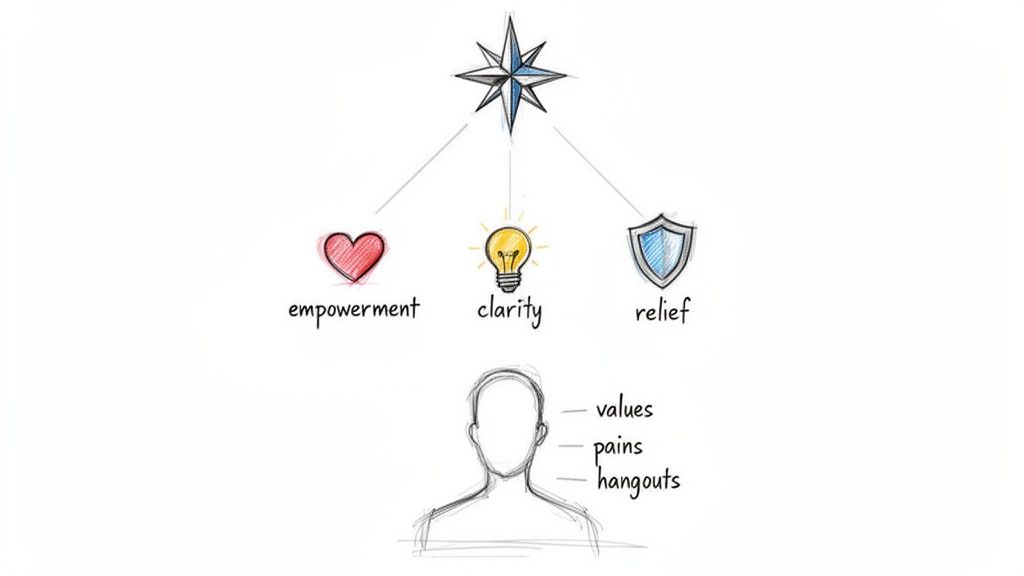
Before a single tweet is sent or one blog post is published, you need a North Star. Every action you take to build awareness must come from a powerful, unified source of truth.
This foundation isn't just about picking a logo or a cool color palette. It’s about getting to the very heart of your brand's emotional core and painting a crystal-clear picture of who you're building it for. If you skip this step, all your marketing efforts will feel disjointed, random, and ultimately, ineffective.
Your very first job is to pinpoint the specific feeling you want your brand to spark in people. What’s the one core emotion your product truly delivers? Is it the feeling of empowerment that comes from mastering a new skill? Maybe it's the sense of clarity when their workflow is finally organized, or the deep relief of seeing a stubborn problem disappear.
Try to lock in one to three of these core emotions. This deliberate choice will become the filter for everything you do from here on out, making sure every piece of content hits home on a much deeper level.
Nail Down Your Core Emotional Promise
For just a moment, forget about features and functions. People don't really buy what your product does—they buy what it does for them. They buy a feeling.
Let’s make this real with a quick exercise. Finish these sentences for your brand:
- When a customer uses our product, they feel __________.
- Before they found us, they felt __________.
- Our brand stands for the feeling of __________.
This isn't just fluffy branding talk; it's a strategic necessity. A staggering 69% of marketers see emotional branding as vital to their success. Why? Because 77% of consumers make buying decisions based on a brand name, not just the product itself.
When you anchor your brand in a core emotion, you start building the kind of powerful recognition that creates fiercely loyal customers.
Get to Know Your Audience—Really Know Them
Once you have your emotional core locked in, you can start building a profile of the person who desperately needs to feel that emotion. We're going way past generic demographics like age and location. It's time to dive into the psychographics—the values, beliefs, and pain points that actually drive their decisions.
Ask yourself these questions to create a rich, detailed persona:
- Values: What do they truly believe in? Do they prioritize efficiency, creativity, or maybe community above all else?
- Pains: What's that nagging problem that keeps them up at night? What specific frustration is causing them stress or anxiety?
- Hangouts: Where do they actually spend their time online? Are they scrolling through Twitter, contributing to specific subreddits, or active in niche Slack communities?
Your goal is to forge an unbreakable link between what your brand stands for and who you're building it for. An indie hacker building a developer tool might target the feeling of 'flow,' connecting with an audience that values uninterrupted productivity and hangs out on Hacker News.
Going through this process will completely change how you build brand awareness. Instead of just shouting into the void, you'll be starting a real conversation with a specific person, in a place they already know and trust. This is the bedrock of all great marketing.
If you want some inspiration from other founders putting this into practice, check out our collection of real-world examples at https://buildemotion.com/inspiration.
Choose Your High-Impact Channels
You’ve found your emotional North Star and know exactly who you’re building for. Fantastic. Now, where are you going to show up and tell them about it? This is where so many founders I’ve seen get completely overwhelmed. They fall into the trap of thinking they need to be everywhere at once, and it’s a fast track to burnout and zero momentum.
The real secret to building a brand, especially when you're flying solo, is strategic focus. Your goal isn't to plant a flag on every social media platform. It's to build a commanding presence on the right ones. We’re talking about hand-picking just two or three channels where you can go deep, be relentlessly consistent, and actually own the conversation.
This isn’t about chasing what’s trendy; it’s about what’s truly effective for you and the people you want to serve. By concentrating your energy, you turn scattered, random acts of marketing into a focused beam that cuts right through the noise.
Find Your Audience in Their Natural Habitat
The first rule of picking your channels is beautifully simple: go where your people already are. Seriously, don’t try to drag them over to some new platform you prefer. Instead, slip into the communities and conversations where they’re already hanging out, asking questions, and sharing their biggest headaches.
For indie hackers and makers, this often means looking beyond the usual suspects.
- Twitter/X: This is the undisputed town square for the build-in-public movement. It’s the perfect spot for sharing your progress, connecting with fellow builders, and getting that crucial, immediate feedback.
- LinkedIn: The professional powerhouse. If your product serves other businesses (B2B) and you have a knack for writing thoughtful, industry-specific content, this is your stage.
- Targeted Subreddits: Reddit is an absolute goldmine of niche communities. Your mission is to find the subreddits where your ideal customers are asking for help (think r/SaaS or r/sideproject) and become the most genuinely helpful person in the room.
- Niche Directories: Never underestimate the power of being listed where people are actively shopping for tools. Getting on sites like Product Hunt, Betalist, or industry-specific directories can be a game-changer for driving high-intent traffic.
Put on your anthropologist hat for a week. Just observe. Who’s posting? What kind of content gets real, human engagement? Where do the most authentic conversations happen? You're looking for the digital "watering holes" your audience can't stay away from.
Align Channels with Your Personal Strengths
The perfect channels for you live at the intersection of where your audience is and where you can actually shine. Building a brand should feel energizing, not like a dreaded chore on your to-do list. Being brutally honest with yourself here is the key to long-term consistency.
Think about what you actually enjoy creating:
- Are you a writer at heart? If you love crafting a compelling argument or telling a story with words, platforms like a blog, LinkedIn, or Twitter will feel like coming home.
- Do you come alive on video? If you're comfortable on camera and can break down concepts visually, YouTube or short-form video on TikTok or Instagram Reels could be your unfair advantage.
- Are you a natural conversationalist? If you thrive on that back-and-forth dialogue, then diving into Reddit threads or hosting a community on Slack or Discord is your sweet spot.
Choosing a channel that syncs up with your personality is the single biggest predictor of whether you'll stick with it. If you hate writing, don’t chain yourself to a daily blog. If you’re terrified of video, don’t build your entire strategy around YouTube. Pick a format that lets you show up as your most authentic self.
A Practical Framework for Making Your Choice
To cut through the analysis paralysis, let's make this decision incredibly simple. This isn’t a gut feeling; it’s a strategic choice. I created this little framework to help founders get unstuck and move forward with confidence.
Channel Selection Framework for Solo Founders
This table breaks down some popular channels to help you weigh the pros and cons based on your specific situation. Use it to find the best fit for your limited time and resources.
| Channel | Best For | Effort Level | Example Daily Action |
|---|---|---|---|
| Twitter/X | Indie hackers, B2C products, build-in-public updates | Low-to-Medium | Post one short update on your progress and reply to two relevant conversations. |
| B2B SaaS, professional services, thought leadership | Medium | Share one insightful post about an industry trend and comment on a key influencer's article. | |
| Niche products, community-focused tools, validation | Medium-to-High | Find one relevant question in a target subreddit and provide a genuinely helpful, non-promotional answer. | |
| Niche Directories | New product launches, getting initial traction | Low | Submit your product to one new directory with carefully crafted messaging. |
Choosing with intention is your superpower. By picking just two or three of these and committing, you build a sustainable practice—a true habit. This focused approach is how you generate the momentum that leads to real, lasting brand awareness.
For a deeper dive, you can explore how to assess different marketing channels for your specific business in our extended guide. But for now, the most important thing is to choose, commit, and start building that daily streak.
Establish Your Daily Marketing Practice
Alright, you’ve pinpointed your audience's core emotions and you know which channels are your sweet spots. Now for the fun part: turning all that strategic thinking into real-world action. This is where the rubber meets the road, where the abstract idea of "brand awareness" becomes a concrete, daily habit. We're about to shift from planning to doing, breaking down big goals into small, repeatable actions that build unstoppable momentum.
The entire system I'm about to show you boils down to one powerful truth: consistency trumps intensity. You can pour a ton of money into a huge, one-off marketing campaign and get a nice little spike in attention. But real, lasting brands are built brick by brick, day by day, through a dedicated practice. This isn't about finding extra hours in your day—it's about finding a few focused minutes to make a real connection.
From Grand Plans to Micro-Actions
So, what does a "daily action" actually look like? It’s probably smaller and faster than you’re imagining. The key is to pick things you can knock out in just a few minutes. This makes it ridiculously easy to get a win on the board every single day, even when things are chaotic.
Here are a few examples of what I mean:
- Twitter/X: Fire off a quick post about a small win or a lesson you just learned while building your product.
- Reddit: Jump into one of your target subreddits, find a relevant conversation, and leave a genuinely helpful comment. No selling, just helping.
- Niche Directories: Spend five minutes submitting your product to a new directory. Think specialized lists for AI tools, no-code solutions, or whatever your niche is.
- LinkedIn: Share a sharp insight on a trend you're seeing in your industry, or drop a thoughtful comment on a post from someone influential in your network.
- Cold Outreach: Send one highly personalized email to a potential partner or a user you genuinely admire.
The magic isn’t in any single tweet or comment. It’s in the accumulation of them. Each micro-action is a brick. One brick is just a brick, but when you lay one down every single day, you eventually build a fortress of brand awareness.
This approach flips marketing from a daunting, soul-crushing task into a rewarding habit. Watching your activity streak grow becomes this incredible motivator, giving you tangible proof that all your small efforts are adding up to something big.
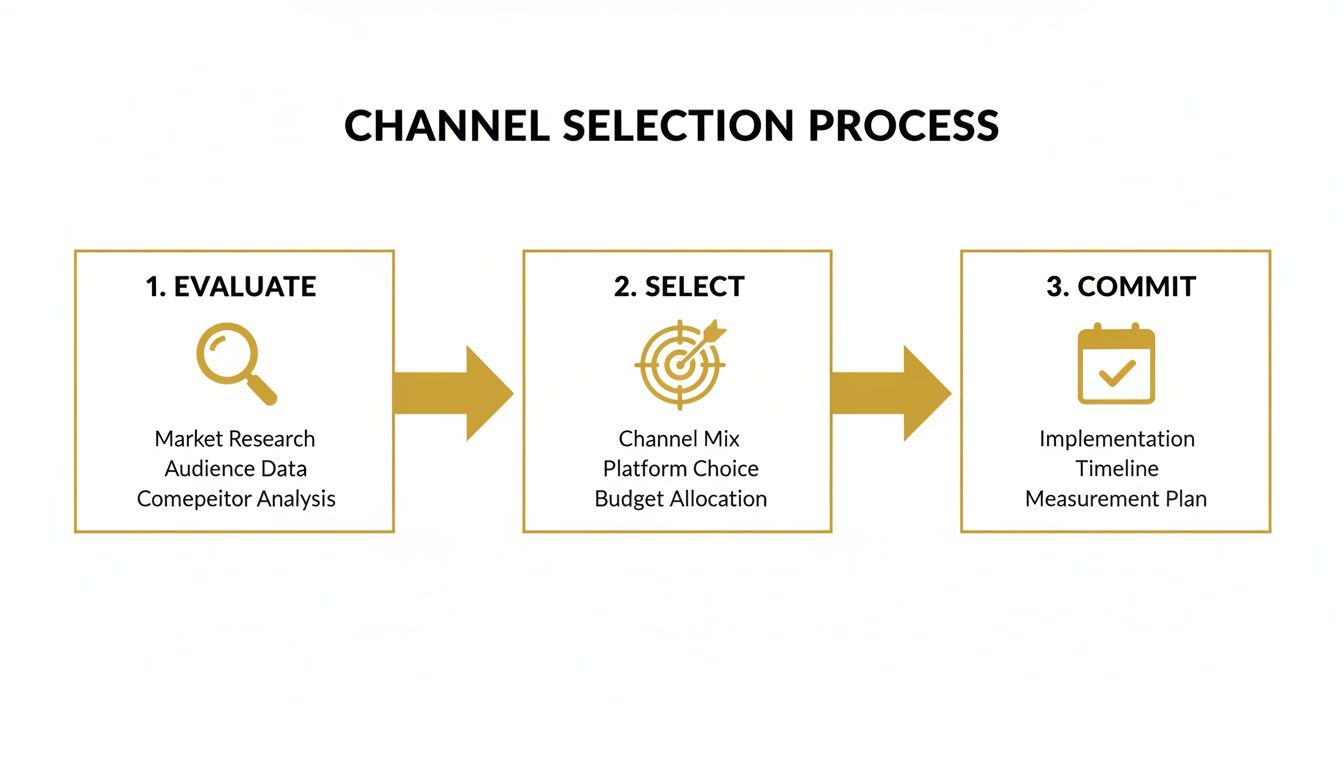
The real takeaway here is that committing to a channel isn't a one-and-done decision. It's an active, ongoing process that you live out through these daily actions.
Make Every Action Count with Personalization
Showing up every day is half the battle. The other half is making sure your actions actually land with people. Generic, copy-pasted messages are the fastest way to get ignored. But messages that feel personal and relevant? They cut right through the noise and forge real connections.
This is where having the right tools can be a game-changer. For many companies—a whopping 47%, in fact—brand awareness is the top priority for their content efforts. Personalization is what fuels that success. Think about it: AI-driven personalization can boost consumer spending by 38% and satisfaction by over 50%. Personalized CTAs have been shown to convert over 200% better, and simple personalized emails see open rates jump by 29%. These numbers aren't just trivia; they're proof that making every touchpoint feel human and tailor-made is what turns tiny actions into powerful results. You can dig into more of these powerful branding statistics and see the impact for yourself.
Tools like the guided message generators in Build Emotions help you weave your brand’s unique emotional fingerprint into every post, email, or comment you write, without having to stare at a blank page.
Building Your Action Templates
To make your daily practice even more frictionless, it helps to have a few go-to content templates in your back pocket. I’m not talking about rigid scripts, but flexible frameworks you can adapt on the fly.
Here’s a dead-simple template for a "Build in Public" style tweet:
- Structure: [Small Win] + [Quick Learning] + [Engaging Question]
- Example: "Just shipped a tiny UI fix that improved user onboarding by 10%! Lesson learned: the smallest details matter way more than you think. What's one small change that's had a big impact for you?"
Having a few of these on hand completely removes the paralysis of the blank screen. You just plug in your latest progress, hit post, and you're done. It's a way to systematize your creativity, making sure you can stay consistent without ever sacrificing quality.
Connect Your Daily Actions to Real Results
You're putting in the work. Every day, you're posting, commenting, and getting your name out there. You're building an incredible streak and showing up consistently. But how do you actually know if it’s paying off?
This is where everything clicks. It's the moment we bridge the gap between your daily grind and the tangible results that prove your efforts are making a real impact.
We’re not going to get lost in complex analytics dashboards or drown in a sea of data. For a founder just trying to get a spark of brand awareness, that’s a total waste of precious time. Instead, we’re going to laser-focus on a handful of simple, powerful signals that tell the real story.
The whole point is to close the loop between effort and outcome. When you can draw a straight line from your activity streak to a jump in website traffic, something incredible happens. Marketing stops feeling like a shot in the dark and starts feeling like a direct lever you can pull to drive growth.
Focus on Metrics That Truly Matter
Let's forget about vanity metrics for a second. Things like raw impressions or follower counts can feel good, but they don't tell you if you're building a genuine connection with the right people. At this early stage, we need to track the numbers that show real interest and intent.
Think of these as the vital signs for your brand's health:
- Referral Traffic: This is pure gold. It shows you exactly which channels—a specific subreddit, a guest comment, or a directory submission—are actually sending curious people your way.
- Newsletter Sign-ups: When someone hands over their email, it's a massive vote of confidence. It means they want to hear more from you, turning a fleeting visit into a potential relationship.
- Genuine Social Engagement: Look beyond the simple "likes." Are people asking thoughtful questions? Are they sharing your content with their own take? This is the kind of interaction that proves you're striking a chord.
These aren't just numbers on a screen; they're direct feedback from the world. They tell you what's landing, what's falling flat, and where you should double down.
The most powerful motivator is seeing progress. When you connect your daily actions in a tool like Build Emotions to your Google Analytics data, you can literally see the cause and effect. "Wow, that five-day streak of helpful Reddit comments led to a 20% bump in referral traffic." That's not just data; it's fuel for the fire.
Establish a Simple Weekly Review
To make this sustainable, you need a rhythm. A simple, repeatable habit for checking in on your progress. Don't overthink it. Just block out 30 minutes at the end of each week for a quick, focused review.
During this time, your mission is to answer three simple questions:
- What Worked? Dive into your channel analytics. Which posts sparked the best conversations? Which directory sent over the most visitors?
- What Didn’t? Be honest with yourself. Which efforts felt like shouting into an empty room? It’s perfectly fine for some things not to work. The key is to learn from them and move on fast.
- What Will I Do Next Week? Based on what you just learned, make one small tweak. Maybe you’ll write more posts in that style that resonated, or focus more energy on the directory that actually delivered.
This cycle of action and review is how your daily habit gets smarter over time. Week by week, you’re not just blindly repeating tasks; you're sharpening your strategy based on what the real world is telling you.
This simple review is the engine of your brand-building machine. It ensures your consistency leads to ever-increasing intelligence and impact. For more ideas on effective places to be seen, check out our guide on how to get started with niche online directories. This process turns a daily habit into a powerful, measurable system for growth.
Have a Question? You're Not Alone.
Getting started on this brand-building journey can feel like you're trying to find your way in the dark. It’s totally normal to have questions and a few doubts creep in. I've been there. This section is all about shedding some light on the most common questions I hear from founders, so you can move forward with clarity and confidence.
Let's tackle the stuff that might be holding you back.
How Long Until I Actually See Results?
This is probably the number one question on everyone's mind. The honest, no-fluff answer? Brand awareness is a marathon, not a sprint. It's the slow, steady drip of your daily efforts that eventually fills the bucket.
Sure, you might get a lucky break with a viral post or a big launch day, but real, lasting brand recognition is built brick by brick, day after day.
But you won't be flying blind for months. Look for the small wins, the little signs you're on the right track. You can usually spot these within the first 30-60 days:
- Your follower counts are ticking up organically, not just from random follows.
- You're getting more replies, DMs, and real people are mentioning you in conversations.
- Website traffic from your social channels or direct visits is slowly but surely climbing.
The trick is to focus on the process. Keep your daily streak going and watch how these little green shoots start to pop up. Don't stress about becoming an industry name overnight. Just win today. The rest will take care of itself.
What if I’m Terrible at Creating Content?
I hear this all the time, and it’s a fear that paralyzes so many brilliant people. Let me be clear: you don't need to be a slick copywriter or a video pro to build a brand. Authenticity eats perfection for breakfast.
People are drawn to real stories from real people. Your journey—the highs, the lows, the "aha!" moments—is your most powerful content. Just share what you're learning and building. That's it. Your unique perspective is your superpower.
And remember, you don't have to go it alone.
This is exactly where systems and smart tools come in. Think about tools with guided content generation. You can plug in a few details about your product and the emotions you want to evoke, and it will give you a fantastic, on-brand starting point for posts, emails, or directory listings. It helps you get past that intimidating blank page and keeps your message consistent.
How Much Time Do I Really Need to Spend on This Every Day?
The goal here is a sustainable rhythm, not burnout. Commit to an amount of time you can genuinely stick with, even on the days when everything is on fire. For most of us, that sweet spot is just 15-30 minutes a day.
In that small pocket of time, you can knock out several meaningful actions:
- Share a few thoughtful tweets.
- Drop a valuable comment on a relevant LinkedIn conversation.
- Add your product to a new indie directory.
This whole system is designed to make marketing feel like a simple, repeatable habit, not another full-time job. Once you’ve built that muscle, you can always decide to dedicate more time. But starting small is the secret to making it stick for the long haul.
Should I Just Pay for Ads to Speed Things Up?
As a founder, especially if you're bootstrapping, your time and effort are far more valuable than your ad budget in the early days. Paid ads can be like rocket fuel, but only if you point them in the right direction. And you find that direction through organic, hands-on marketing first.
Think of it like this: your daily organic actions are your laboratory. You're testing messages, finding your voice, and discovering what truly resonates with your audience—all for free.
Once you’ve found a message that consistently gets a great response, that's when you pour money into ads to show it to more people. You're not gambling on an ad; you're amplifying a proven winner.
It's about lighting the fire yourself before you pour gasoline on it.
Ready to stop guessing and start building a marketing habit that actually works? Build Emotion gives you the framework, the tools, and the daily encouragement to turn small actions into real, measurable brand awareness. Start your journey today.
Created with the Outrank tool